
The final entry in the production ledger looks like another working day.
Diageo’s senior archivist, Jo McKerchar, is showing us the production ledger at Brora. Dates, decisions, the ordinary business of making whisky. Then, in March 1983, the writing stops.
I imagine it sitting there, waiting for the men to come back. Another shift, another page. They never did.
We are here for Brora’s new 54-year-old, distilled in October 1972. Yet this book will stay with me as we move through the evening: a reminder that before Brora became a fabled ghost distillery, it was somewhere people went to work.
Earlier, a piper welcomed us into the November cold in Sutherland, on the east coast of the northern Highlands. Brora’s host, Andy Flatt, supplied the warmth. His enthusiasm makes a place I have mostly encountered through coveted bottles feel like somewhere I could happily spend an afternoon asking questions. He notes my notebook at first glance.
The distillery reopened in May 2021, after 38 silent years. Jo describes visiting before the restoration and finding the stills in place, the building looking as though the men had simply gone out.
Our first dram is a 1982 Brora, Hidden Beneath, from a less peated period. We are travelling backwards towards 1972, when Brora’s famous smoky character served a practical purpose: supplying blenders short of peated whisky from Islay. The reputation came later.
Recovering the work
Following Andy into the distillery, I discover that cold is an indoor experience too until we reach the stillhouse.
Recovering Brora’s character has involved records, equipment and people’s memories. A replacement mill was found in an English brewery, then fitted with older parts to reverse its modernisation. Considerable effort had gone into making a working machine suitably old-fashioned.
Andy explains the difficulty beneath such decisions. What someone is taught to do, what they actually do and what they record can differ. Reconstructing a process requires more than following the paperwork.
When former workers returned after the reopening, they broadly approved. Though in true local style, Jimmy, who had been the distillery painter, found fault with the paintwork. I like him immediately, despite never having met him.
We taste earthy new spirit at 70.1% ABV, then help fill and sign a cask during our press visit. The experienced site workers seem more comfortable doing the job than receiving our attention. I hope they are on overtime.
After that ledger, seeing spirit being put away for the future feels particularly significant.
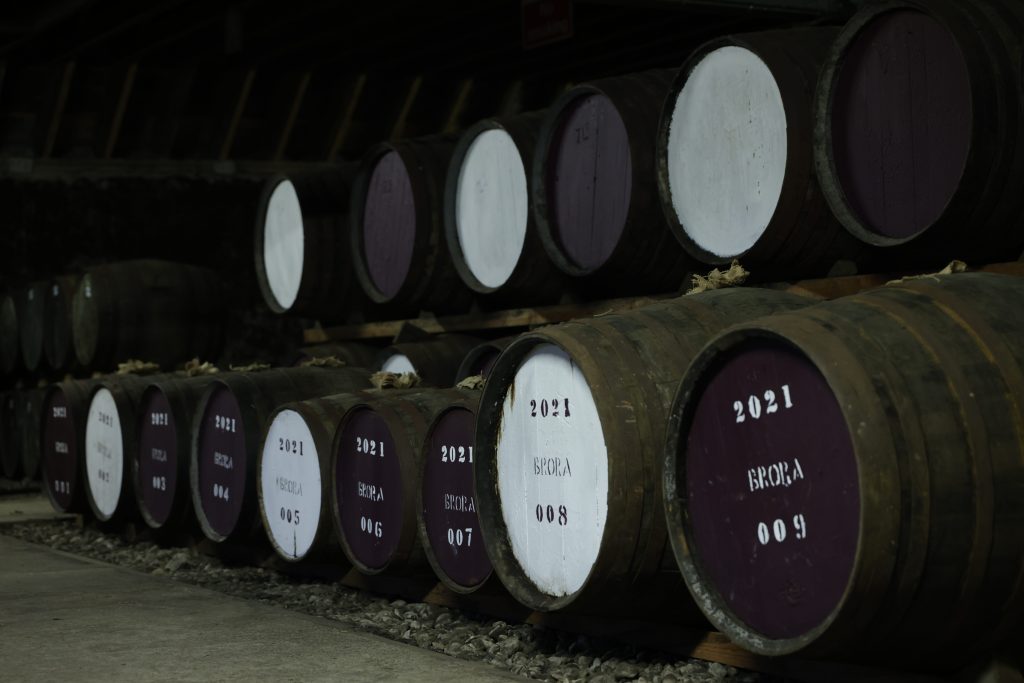
The whisky waiting for us
Master blender Dr Craig Wilson explains how the 1972 has matured gently throughout its life in a refill European oak butt, allowing its powerful, earthy character to soften and integrate. I ask what another year would do. He thinks it would continue to soften.
There is judgement behind this extraordinary age statement. Fifty-four years does not, by itself, tell you when to bottle a whisky.
I feel deeply honoured to taste it. It was already maturing before I was born. People have looked after it through all the years since, and now a little reaches my glass.
The setting comes with it: the piper, the archive, Andy’s company and several hours of anticipation. I cannot separate those things entirely from my experience. I can pay attention to what I find.
Marzipan, Turkish delight and a little citrus lead into potpourri and scented wood. The sweetness has considerable complexity. On the palate, it is less meaty than the 1972 Brora I remember from the 20-year-old releases. The peat comes up to meet me, wrapped in icing-sugar sweetness. Generous and chewy, it coats the mouth, moving towards overripe fruit and childhood sweets. The finish goes on and on.
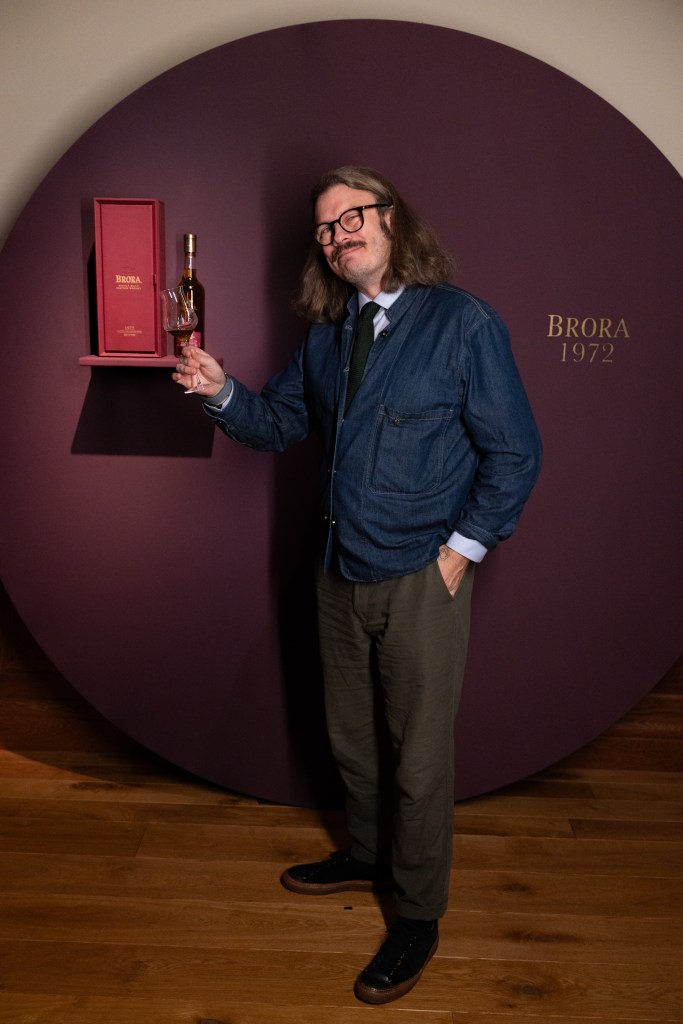
What surrounds the glass
Bottled at 46.4% ABV, this is Brora’s oldest release: 120 bottles at £19,500 including UK taxes, offered through Brora and Diageo’s private-client teams in select markets.
Five handmade Goyard trunks provide another level of presentation, in burgundy Goyardine canvas, with purchasers’ initials hand-painted in the house’s Art of Marquage tradition. They house crystal decanters of the same whisky; pricing is by enquiry.
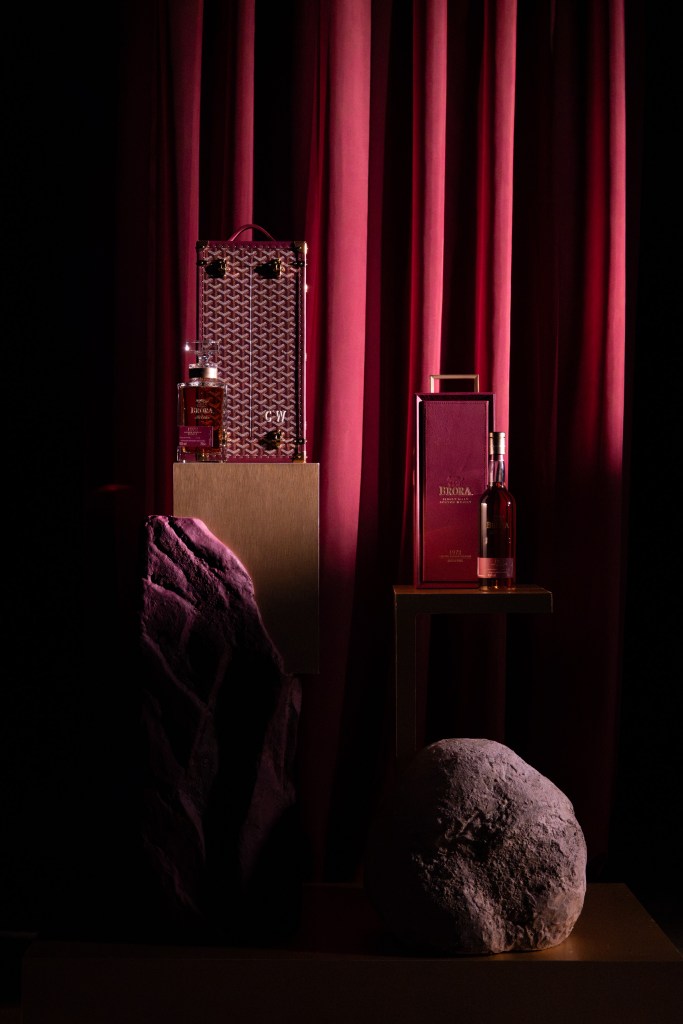
I would dearly love a bottle. I cannot afford one. Enjoying the whisky does not require me to pretend I can judge its price on flavour alone.
The new Highland Escape offers what Brora calls the only official opportunity to taste it, exploring the distillery and its archival ledgers. Organisers estimate approximately £4,700 for two people, including accommodation, transfers, a private chef for two nights and the distillery experience.
Back inside by the fire, I am glad of time to talk about what we have tasted. I would return for Andy’s company alone.
The ledger records where the old working life stopped. Somewhere here, a newly filled cask carries my signature. I look forward to assessing my contribution in a few years.
I visited as a guest on a hosted press trip, 17–19 November 2026. The whisky launched on 25 November 2026.


Leave a Reply