
I didn’t set out to write a “year in review.” That framing feels too neat, too managerial, especially for a year that refused to behave itself.
Instead, this is something closer to taking stock. Of listening back. Of noticing what stayed with me long after the articles were filed, the trips completed, the quotes approved. Not the launches, not the numbers — but the moments when people stopped performing and started telling the truth — to themselves, and to others.
It has been ten years since I started writing about drinks. I didn’t clock that consciously until recently. Perhaps because the longer I do this work, the less I find myself writing about liquid, and the more I find that I am writing about people — what they carry, what they risk, what they lose, and what they choose to keep making anyway.
This year, more than any other, that shift felt unavoidable.
Silence as signal
One of the images I can’t shake is a silent still room.
At Stauning, copper gleamed, everything intact, but nothing moving. The distillery hadn’t failed. The whisky hadn’t suddenly become irrelevant. What had changed was the context around it. Investment pulled back. Distill Ventures restructured. A portfolio recalibrated. Decisions made far from Ringkøbing Fjord landed with real, physical consequence.
Hans Martin Chege Hansgaard did not speak in slogans when we walked that space together. He spoke about making. About identity. About what happens when the thing that shaped your adult life is paused, not by choice, but by circumstance.
It was not despair I heard. It was reckoning.
That same year, I listened to Neil Conway talk about leaving Waterford distillery for the last time. Sitting in his car. The distillery behind him. Eight years of belief condensed into a quiet moment that he will likely carry forever.
Waterford didn’t collapse because it lacked integrity. If anything, it collapsed under the weight of it. Vision outrunning patience. Timing conspiring against ambition. The kind of failure that isn’t a scandal, but still breaks hearts.
Those conversations live rent free in my head. Not because they were dramatic, but because they were honest.
Returns, not beginnings
Matt McKay understands what it means to return something to life.
Leading the first year of the revival of The London Distillery Company meant shaping something that, for years, had existed only in memory. Laying new foundations while respecting what came before. He described 2025 not as a year of beginnings, but of returns — professionally and personally.
There’s something quietly important in that distinction. Returns carry responsibility. They ask what is worth bringing back, and what should be left behind.
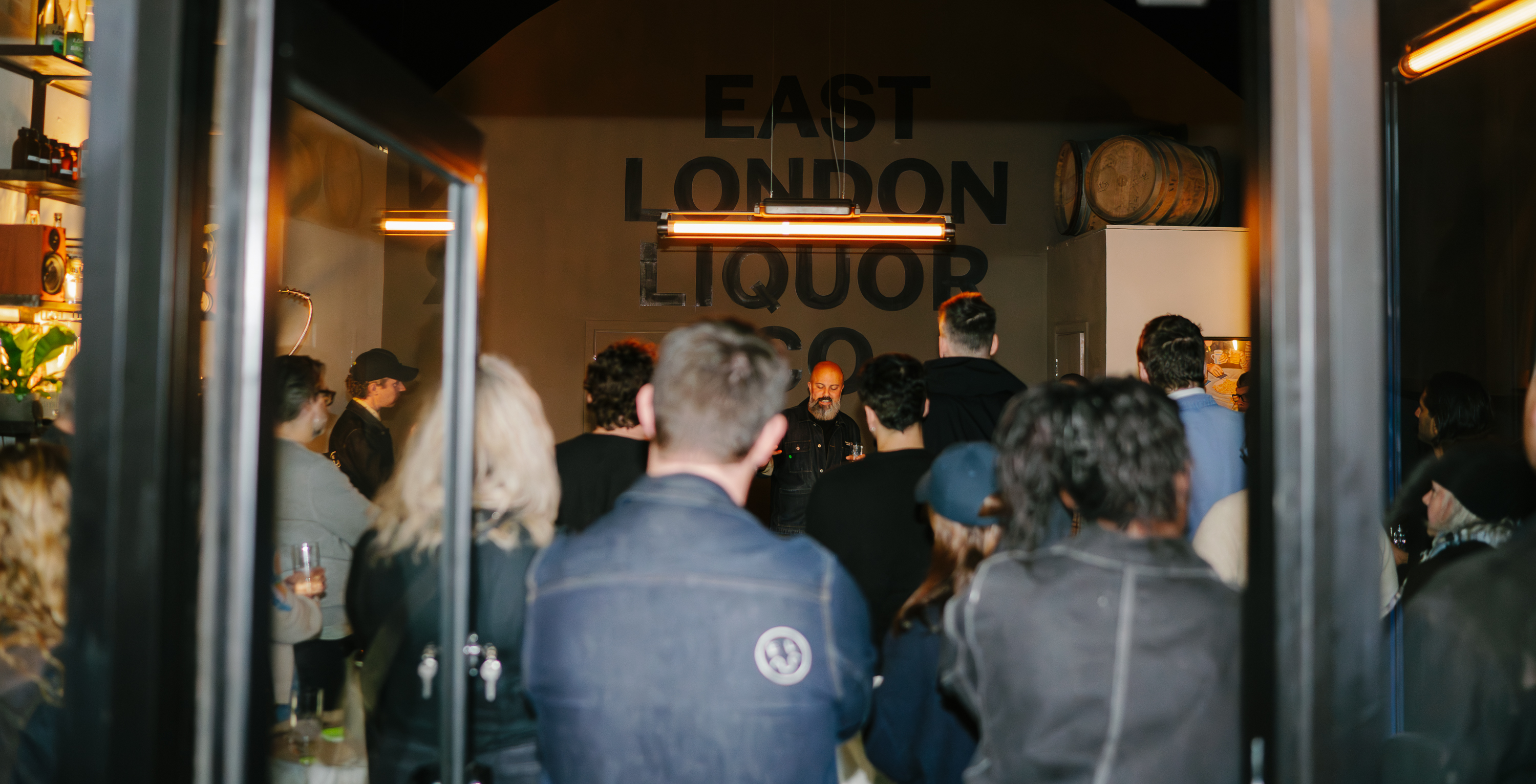
Alex Wolpert, founder of East London Liquor Company, knows that too. Closing a distillery, reopening elsewhere, rescuing a business without losing its soul — that isn’t a brand story, it’s survival. When he says this year taught him that “it’s not about booze, it’s about people,” it lands because he’s lived the alternative.
And when the team there pushed through last-minute chaos to open the doors at 5pm on the dot, it wasn’t triumphal. It was communal. Everyone pulling in the same direction because the work mattered.
The courage to choose yourself
Not all turning points are visible from the outside.
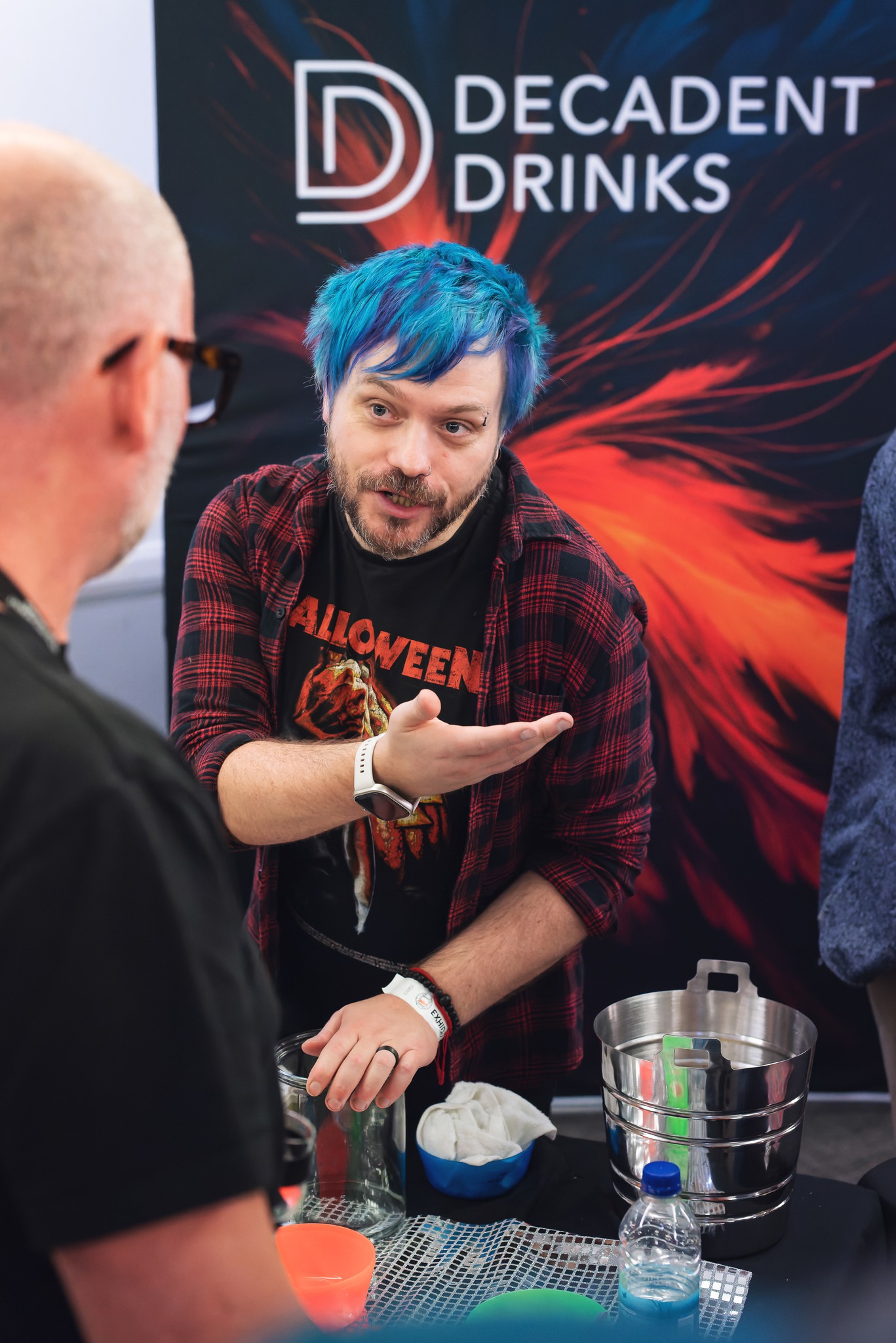
Craig Simpson, who works across design and marketing at Decadent Drinks, spoke about leaving a shop he had helped build from nothing. Five years of care, identity, late nights, and belief — but without ownership, without security, without space to grow. Walking away didn’t make commercial sense. It hurt. But it was necessary.
Japan, he said, gave him something back he thought he was losing. Distance. Perspective. Permission to exist without producing. He took a job interview in a karaoke booth outside Tokyo, and got the role. Absurd and perfect in equal measure.
What stayed with me wasn’t the romance of the place, but the clarity of the choice. Sometimes what you love isn’t a brand or a project, but the moment you stop setting yourself on fire to keep something else warm.
Balance, without apology
Greg Dillon and his partner Kirsty have built GreatDrams through relentless physical presence. Tastings. Events. Travel. Shirts that became shorthand for joy.
This year, he deliberately did less.
Cutting back from over a hundred in-person events to around fifty wasn’t retreat. It was focus. Bigger moments. Fewer absences. Time at home that didn’t feel borrowed.
Work-life balance is a phrase that often collapses under its own banality. But when someone changes their behaviour, not just their language, it matters.
Making space before it breaks
Not everyone waits until the stills fall silent.
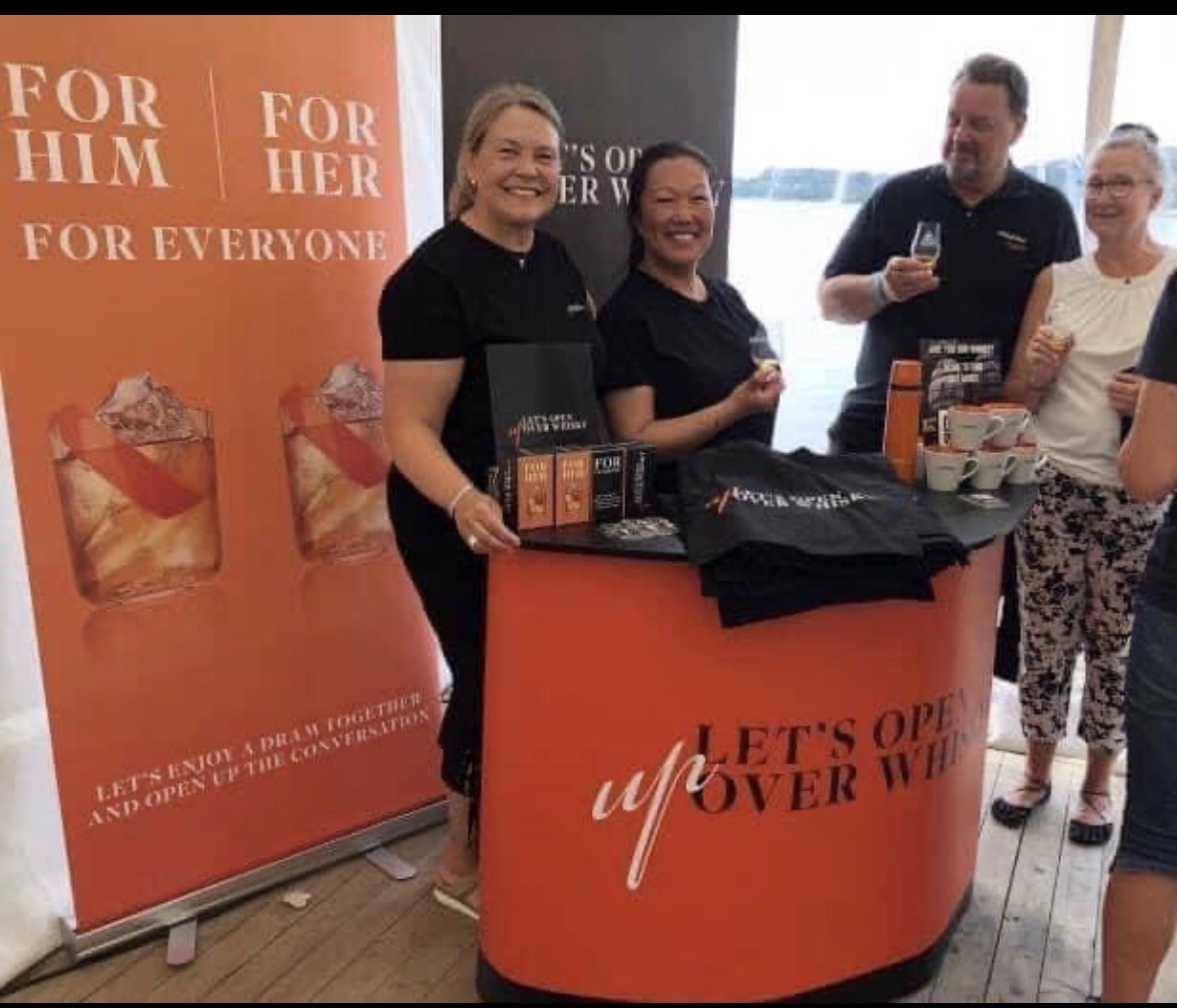
Sara Larsson, Brand Ambassador at High Coast Whisky and founder of Let’s Open Up Over Whisky, has spent the past year actively creating space for people to talk before they reach breaking point. Her work sits at an uncomfortable intersection of care and visibility — emotional labour that rarely appears on balance sheets, but without which industries quietly rot.
What struck me most in our conversation wasn’t the initiative itself, but the cost of carrying it. Holding space for others, especially in a demanding and still male-dominated industry, is rarely neutral. It takes time. It takes energy. And it doesn’t always make your professional life easier.
But Sara understands something fundamental: if we don’t talk while we still can, we end up speaking only when it’s too late.
Two hearts beating
Daniela Brack, a whisky author and journalist, described 2025 as a year where the economist and the human in her were in constant dialogue.
One voice sees correction. Oversupply. Capital misallocation. Market logic doing what markets do. The other mourns each silent still, each abandoned vineyard, each person whose work disappears into spreadsheets.
What brought those two hearts into harmony, she said, was the idea that cooperation isn’t sentimental. It’s rational. Human, yes — but also efficient.
That idea echoed something else she shared with me privately. Her annual ritual of asking herself the same set of questions every year. Not for publication. Not for performance. Failed projects. Missed opportunities. Happy moments. Honourable ones.
I’ve never done that. I might start. I think I need to.
Using the space you’re given
There are people in this industry who use their platforms to stay safe, and people who use them to stand for something.
Kristiane Westray, a whisky writer, educator, and consultant, belongs firmly in the second camp. She could choose the easier path. Instead, as well as her constant activism, she helped create For the Dolls, a project that raised money for trans+ support in a year that has been even more openly hostile to that community. It did not make her work simpler. It may well have made it harder.
But she understands that whisky has always been about community, long before it was about shareholders. That pubs, bars, and distilleries have historically been places of refuge as much as commerce. When she says “whisky is for everyone,” it’s not a slogan. It’s a stance.

Criticism as care
This year, I was told that criticism wasn’t helpful. That it didn’t “service the industry.” It was meant as a rebuke. I took it as clarification. I am not here to service the industry. I am here to understand it. Especially when understanding is uncomfortable.
In a downturn, uncritical loyalty becomes dangerous. Cosy agreement breeds hubris. Silence protects power, not people. If we can’t question the structures we’re part of, particularly when they start to creak, then we’re not participants — we’re props.
That belief didn’t come from theory. It came from listening. From seeing what happens when the numbers stop working but the people are still showing up.
What passes, what remains
This year, Sir Geoff Palmer passed away. I wrote about his achievements, of course — his science, his pioneering work, his moral clarity. But what lingered was something simpler. The way people spoke about how he made them feel. Seen. Encouraged. Capable.
Legacy, he once said to me, isn’t built deliberately. It emerges from how you live, how you treat people, and how generously you share what you know.
That feels like a fitting lens for this year.
Carrying it forward
I don’t believe the worst is behind us. Many distilleries are still barely clinging on. Costs remain high. Confidence is fragile. The spreadsheets are unforgiving.
But I also don’t believe this is a moment for despair.
I’ve seen what happens when people are honest about where they are. When they put the load down, even briefly, and let someone else see it. When they choose care over optics, and listening over certainty.
The older I get, the more deeply I feel other people’s experiences. The more I understand that asking “are you really okay?” is not a weakness, but an opening.
If this year has taught me anything, it’s that we survive as people first. That making space for reflection isn’t indulgence, it’s maintenance. And that the stories worth telling now are not the shiniest ones, but the truest.
If you’ve made it this far, maybe take Daniela’s questions for yourself. Or don’t. Just pause long enough to notice what stayed with you this year.
Sometimes that’s where the real work begins.
As for me, I’m still here — listening, asking, and trying to be worthy of the stories people choose to put down beside me.
 Drinks Galore
Leave a reply to Review: Highland Park 18 Years Ferraretto Import (1970s) – Words of Whisky | A Whisky Blog Cancel reply