
Every whisky lover dreams of visiting Speyside, home to the most famous distilleries. Mark Jennings suggests another route.
Everyone assumes the perfect whisky pilgrimage begins and ends in Speyside. And why wouldn’t they? It is the region of postcard distilleries, the name whispered reverently by drinkers and collectors alike. But if you begin your journey there — if you actually run through it as I did, quite literally — you discover something unexpected.
Speyside is the door, not the destination.
What lies beyond it, if you keep driving, is something far richer: a whisky journey that moves through mountains and coasts, through stubborn towns and island roads, through modern distilleries and ancient ones, through luxury and rough-edged pubs, through weather that both threatens and blesses. A journey not just across Scotland, but into yourself.
For me — someone who grew up in the north-east of Scotland hating whisky and all its masculine symbolism, then spent years abroad writing about it — this was as much a return as a road trip. A test of how much Scotland, and I, had changed.
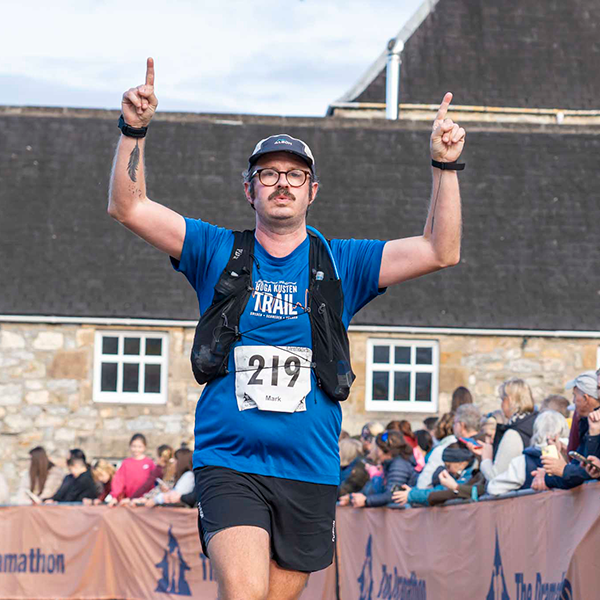
And so we arrived. Edinburgh first, then the three-hour run north on the A90: fields softening into forest, the air sharpening with autumn. The Dramathon awaited — a marathon through the heart of whisky country, linking distillery to distillery by foot. Not everyone runs the full course; some walk the 10K, others tackle the half. A democratic race through the landscape, the sort that lets you pass Glenfiddich on foot, smell Glenfarclas from the road, feel the air thicken with the warmth of spirit.
At the finish line was my partner Andrea — steady, calm, and brave enough to take the wheel on the left-hand side for the first time — the rain had eased into a fine silver mist. I let the bag of drams, gifted to finishers, rest between my feet like a small treasure chest.
Fire, Friendship, and the First Unravelling
In Huntly, an old friend had the fire lit before we arrived. A dog large enough to pass as furniture leaned into my legs. Niall and I have been friends for nearly thirty years — a friendship distilled in its own way, the roughness smoothed out, the sweetness brought forward. We opened some of the marathon drams, their labels still flecked with rain. One tasted faintly of toffee and drying leaves; another was sharper, younger, alive with orchard fruit.
If you don’t have a Niall — most travellers won’t — there are plenty of places in Dufftown or Aberlour that will wrap you in the same warmth. The Dowans Hotel, for instance, with creaking floors and a bar that treats whisky with seriousness but never solemnity. Stay anywhere with a fire and an old sofa; that’s all Speyside ever required.
South to the Highlands: A Road Built for Discovery
The next morning, we pointed the car toward the Highlands. We skirted Aberdeen to the south, the last true city we’d see on the trip, long enough to take in the stern beauty of its granite. We didn’t stay long in the city — we had a different Scotland to find. We shot east following the route of the old Deeside rail line, a route Queen Victoria once took on her way to Balmoral. The railway is gone now, but the road remains, clinging to the river, dipping and rising through pockets of forest.
The heather shimmered purple. Sheep pressed themselves into the verges, chewing indifferently as we passed. And somewhere between Ballater and Braemar, the stereo surprised us with “Mr Brightside.” Despite our twelve-year age difference, we both sang — badly, joyfully — as the road twisted above the River Dee.
We passed Balmoral — King Charles in residence, which meant the gates were firmly shut to commoners — and dropped into Braemar, a village that has transformed since my childhood visits. Once twee and forgettable, now electric with art, energy and community.
Braemar and The Fife Arms: History Rewritten in Colour
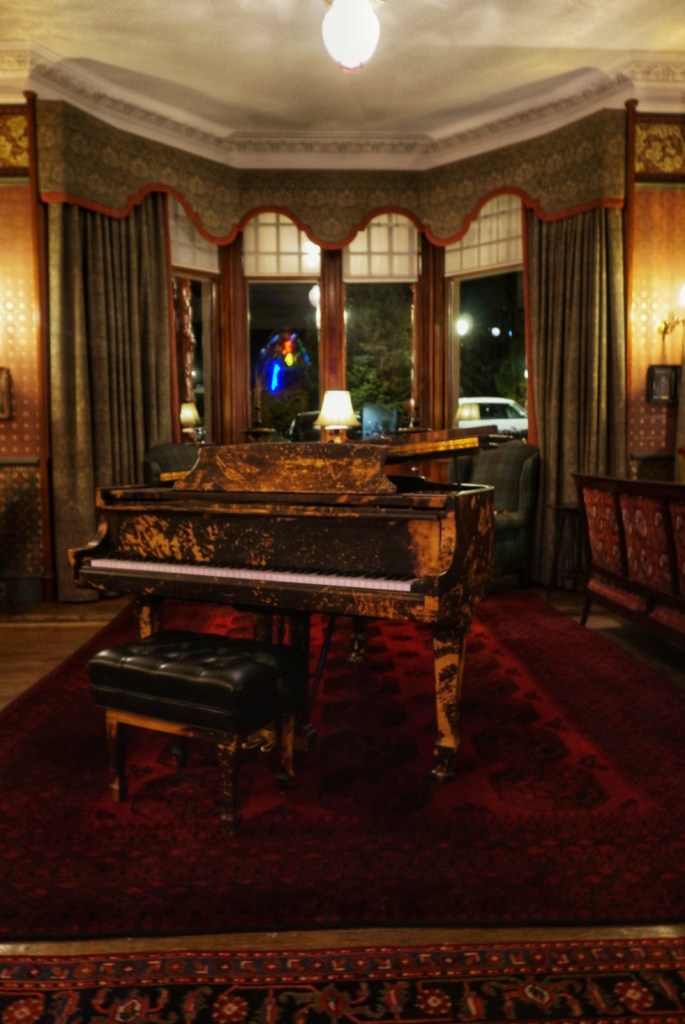
The Fife Arms is the sort of hotel people struggle to describe. Owned since 2019 by Iwan and Manuela Wirth, art collectors and gallery owners, it is both a living artwork and a deeply Scottish experience — a home for expensive art, taxidermy and myth, tartan and marble. Yet despite the two Picassos and the Brugal above the mantel, it never feels austere. It feels lived in.
We had a walking tour of the village that brought Braemar’s layers to life — clan history, wartime stories, Highland Games lore, Queen Elizabeth II’s deep affection for the place. Our guide, a sturdy local woman, knew every cottage and every tale. “Stevenson wrote Treasure Island just over there,” she said, pointing at a house I would have walked past without thought.
In our room, a bespoke Adelphi bottling curated by perhaps the most regarded whisky writer, Dave Broom waited like a quiet welcome. Andrea ran a bath and poured Champagne. I opened the whisky. Rich, herbal, slightly coastal — the sort of bottle that reveals its maker’s mind more than its age.
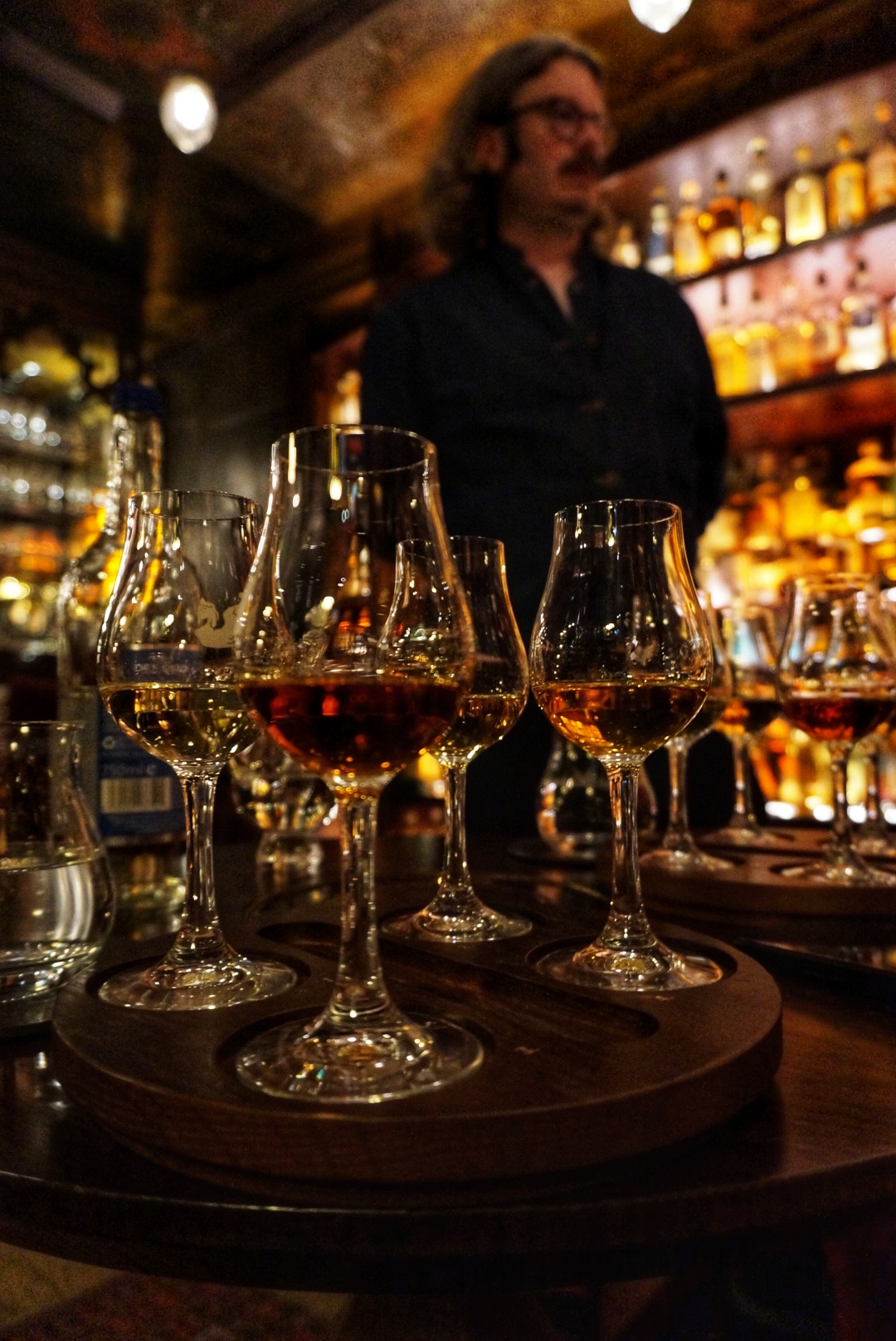
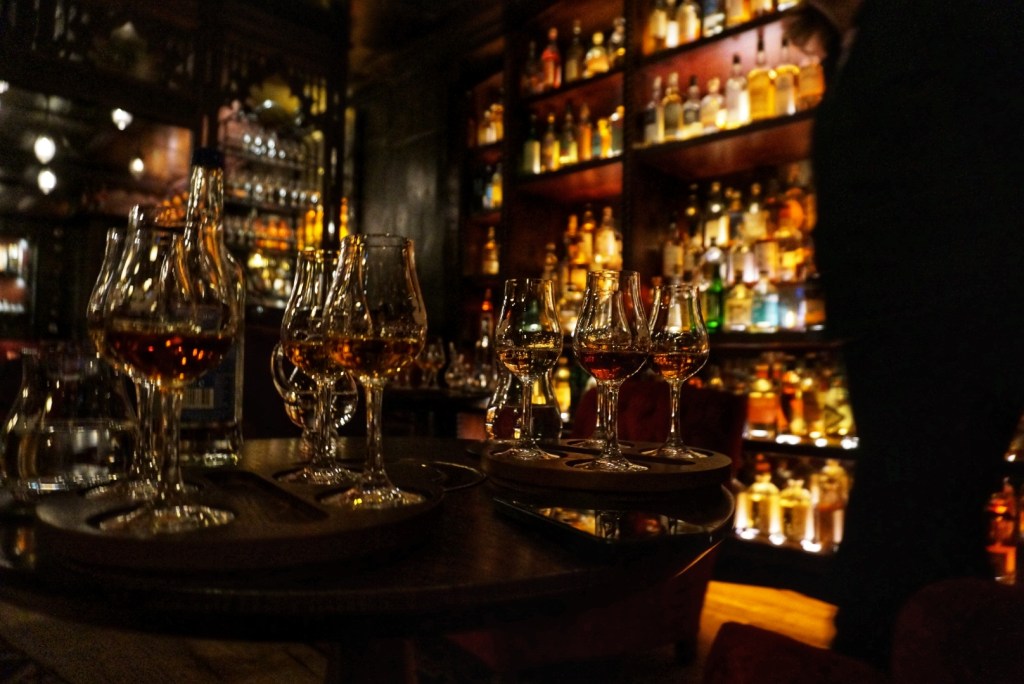
Later, we sank into the armchairs of Bertie’s Bar, the whisky bar governed by head whisky man Tom Addy. Tom is part woodsman, part furniture maker, part whisky sage — a man who built many of the hotel’s pieces and now curates its liquid soul. He serves whisky the way some people tell stories: gently, intuitively, with an eye for what the guest needs rather than what the menu boasts.There is no bar here, just seats and sips and stories.
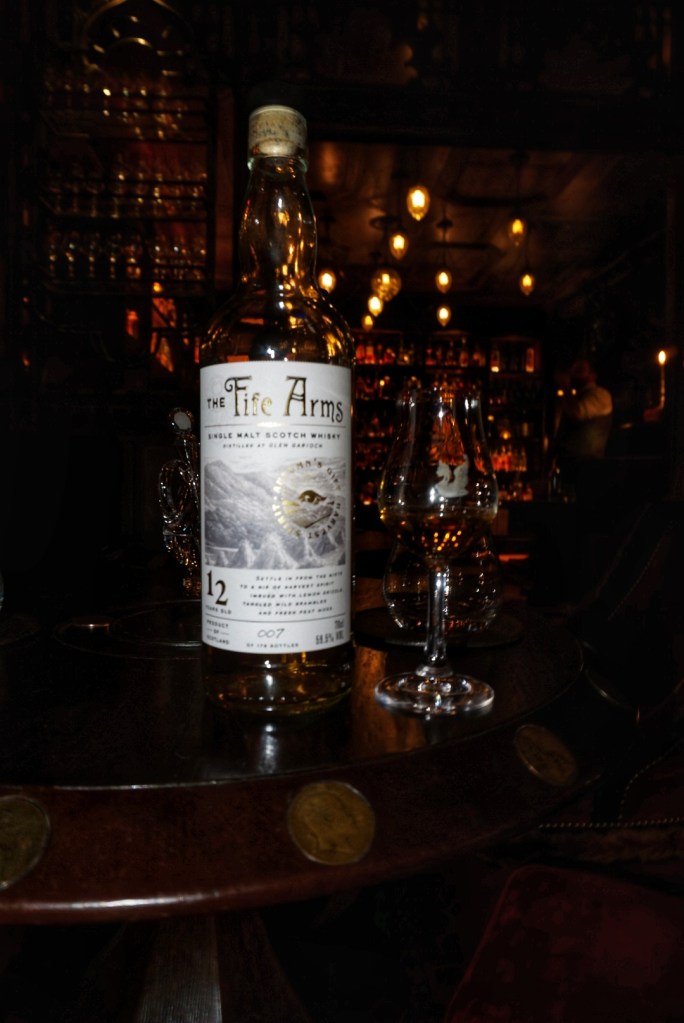
We tried a flight he’d assembled, then the Fife Arms’ own single-cask release, and — almost begrudgingly — I finally tried Octomore. It was fine. Not life-changing. I’ve avoided the peat-smoke-pissing contests of the whisky world for years, and this dram reminded me why. Balance is where magic happens.
I could’ve stayed a week. But the road had other plans.
— Article continues after gallery —
The Long Day South: Glenshee, Killin and the Road to Inveraray
The road out of Braemar rises quickly, the Cairngorms folding in. Glenshee opens ahead — once my childhood ski haunt, now bare and broad under autumn light. The summit was lunar. Then came the descent: a steep, sweeping drop into Perthshire that reminds you how quickly Scotland reshapes itself.
We passed through Pitlochry, busy with walkers, and rolled into Aberfeldy where the quiet, modest frontage of Dewar’s World of Whisky leapt into view. No posing. No theatrics. Scotland is like this, even when you do not intend to find a distillery, you often do. We had no appointment here — so took a dram at the bar, and a bottle at the shop — basking in the warmth of being treated as anonymous visitors rather than whisky media.
Then further along the route Edradour distillery — you practically drive through it. Closed due to staff shortages, ironically echoing the old joke that only “one and a half people” were needed to run it. Still charming.
By Killin, we were starving. The inn turned us away (“lunch is finished”) with the sort of blunt fatigue I remembered from this part of Scotland (some things have not changed). But behind it — almost hidden — was the Falls of Dochart Smokehouse. A small timber building, smoke curling from the chimney, a woman with the kindest smile serving salmon so fresh it could have jumped from the Falls to our plates. An elderflower fizz for me, a local gin for Andrea. The smoke from this fish still lingers with me, and I crave it.
Then came Rest and Be Thankful — one long haul upward on the A83, then a sudden easing of the wheel as the road levels and the glens fall away beneath you. For centuries, travellers paused here to catch their breath and mutter a quiet thanks. We did too, though ours was mostly relief. The mountains were teeth here, the clouds glowing. Down the far side we drove until Loch Fyne widened, metallic and calm.
Before Inveraray itself, we rattled down a pothole-laced track to Fyne Ales, praying nothing would come the other way and more importantly that at this late hour the brewery would be accepting visitors. It was, and Jarl, their perfect cask ale, tasted even better paired with the cold air, Mountain Views, and pallet-built benches.
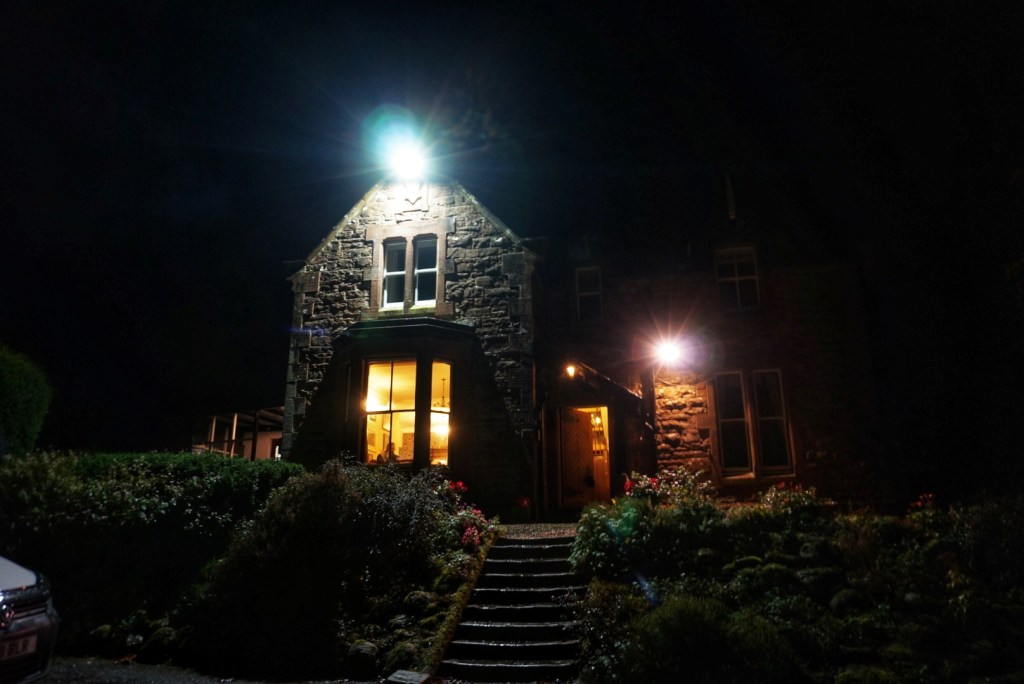
We stayed at The George, one of the truly great inns of Scotland — whitewashed walls, low ceilings, enormous fireplaces. Hope (a person not a feeling) guided us through dinner and drams with a warmth that carried us straight into the adjoining pub, where the shelves glowed with decades-old whiskies sold at prices blissfully out of sync with modern whisky mania. Uno. Laughter. A night that lives on.
Campbeltown: The Long Road South and the Whisky That Wouldn’t Die
The next morning we drove the long, narrowing road down the Kintyre peninsula — a journey that feels less like travel and more like commitment. Towns fell away. Signal vanished. The sea pressed in from both sides.
Campbeltown once called itself the Whisky Capital of the World. And it wasn’t bluster. In its Victorian heyday, more than thirty distilleries operated here, their chimneys crowding the harbour, their output shipped across the Atlantic in quantities that made Speyside look shy. Then came overproduction, grain shortages, the collapse of quality, economic depression and Prohibition. The industry imploded. By the 1990s, only two distilleries remained. Campbeltown nearly died as a whisky region.
What brought it back was not branding or reinvention but stubbornness — a refusal by its distillers to change the way they worked just to satisfy trends. That stubbornness is why we came.
We checked into The Hall, a guesthouse that was more like a boutique hotel: a huge room, a gracious welcome, the perfect reset after the miles.
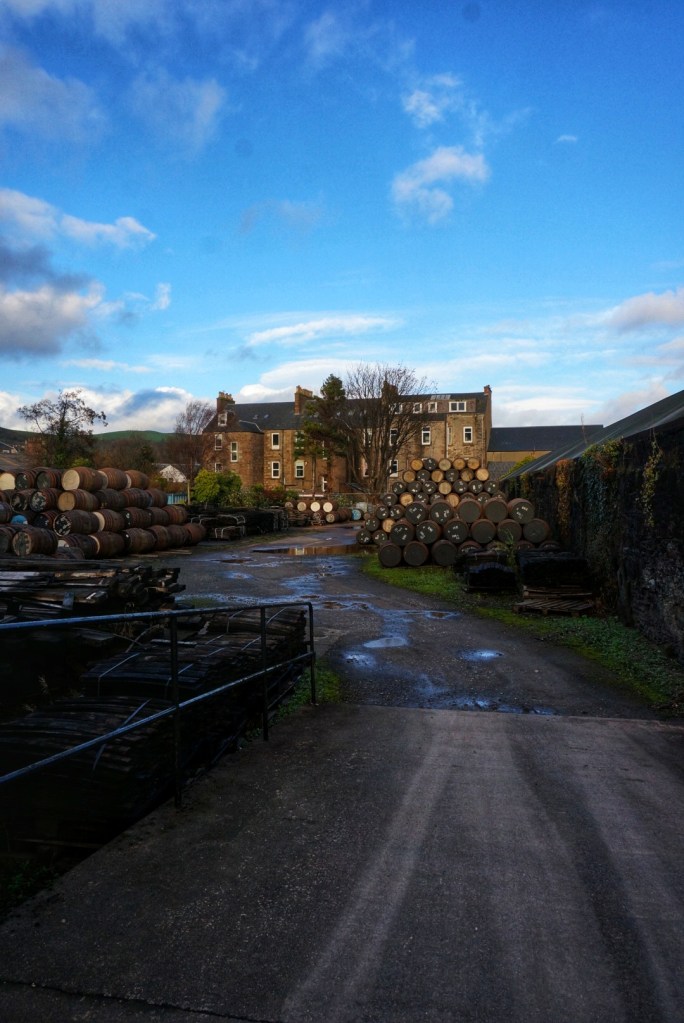
First stop, and again completely unexpected — Glen Scotia, its stillhouse door literally open to the street. Warm, oily Campbeltown air drifting out like an invitation. One we could not resist. There is something so marvelous about city distilleries, so different from the bucolic setting of most in Speyside.
With time to spare before Springbank, we ducked into The Kilbrannan Bar — a place that does not appear in glossy guides but should. It was just past 12, yet the bar was already busy with locals: work jackets slung over stools, pints half-finished, the hum of lived-in conversation rising and falling like a tide.
We ordered packets of crisps for lunch, the kind of decision that only makes sense when the atmosphere is too good to leave. A man at the bar, already a few pints ahead of us, laughed at his own jokes with such hyena-like intensity that the barmaid leaned over and told him — gently, firmly — to apologise. Which he did, immediately, with a sincerity only the very drunk or very kind can muster.
Campbeltown is a working town, maybe even a rough one if you catch it on the wrong day. Standing there, with crisp crumbs on the bar and the windows rattling slightly in the wind, I felt a faint echo of the Scotland I had grown up in. Maybe that was the ghosts talking. Or maybe Campbeltown still carries some of that same stoic defiance.
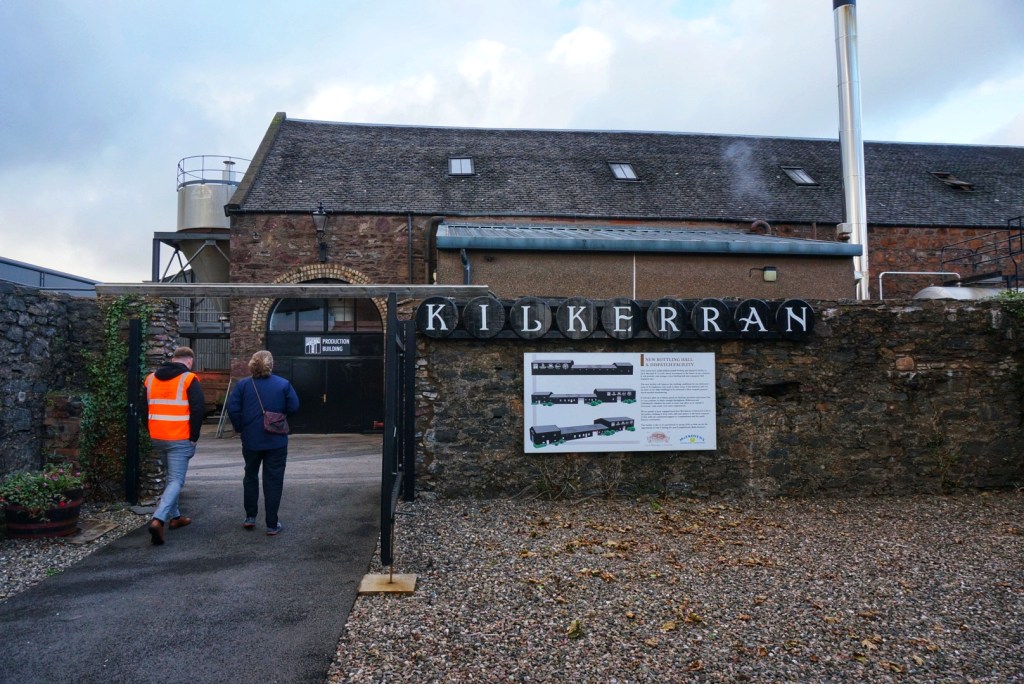
Then: Springbank.— the reason we’d come all this distance.
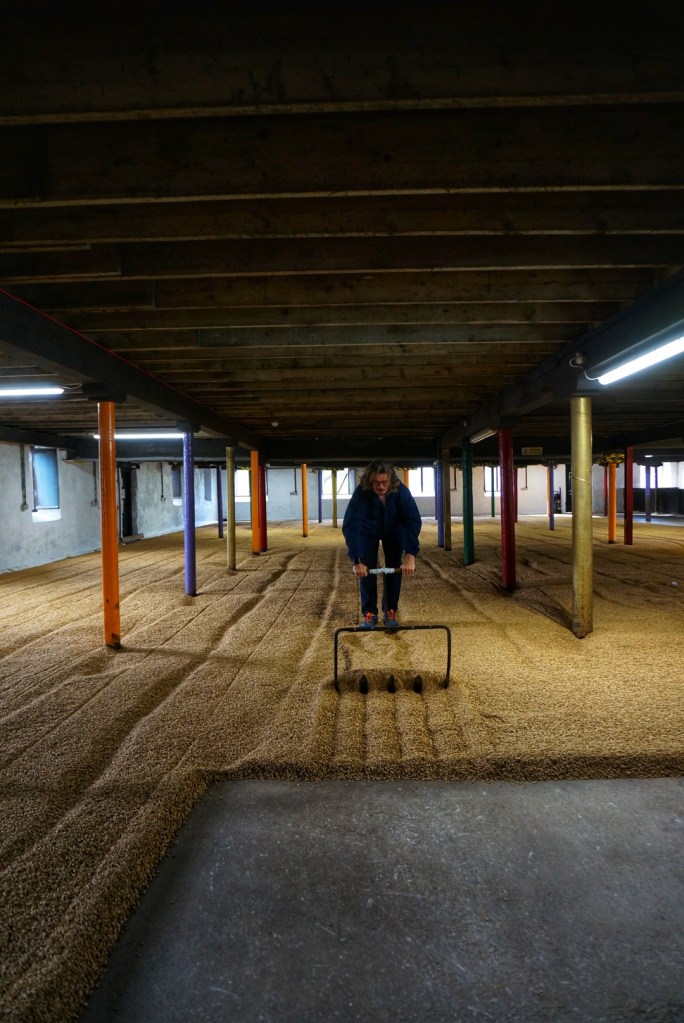
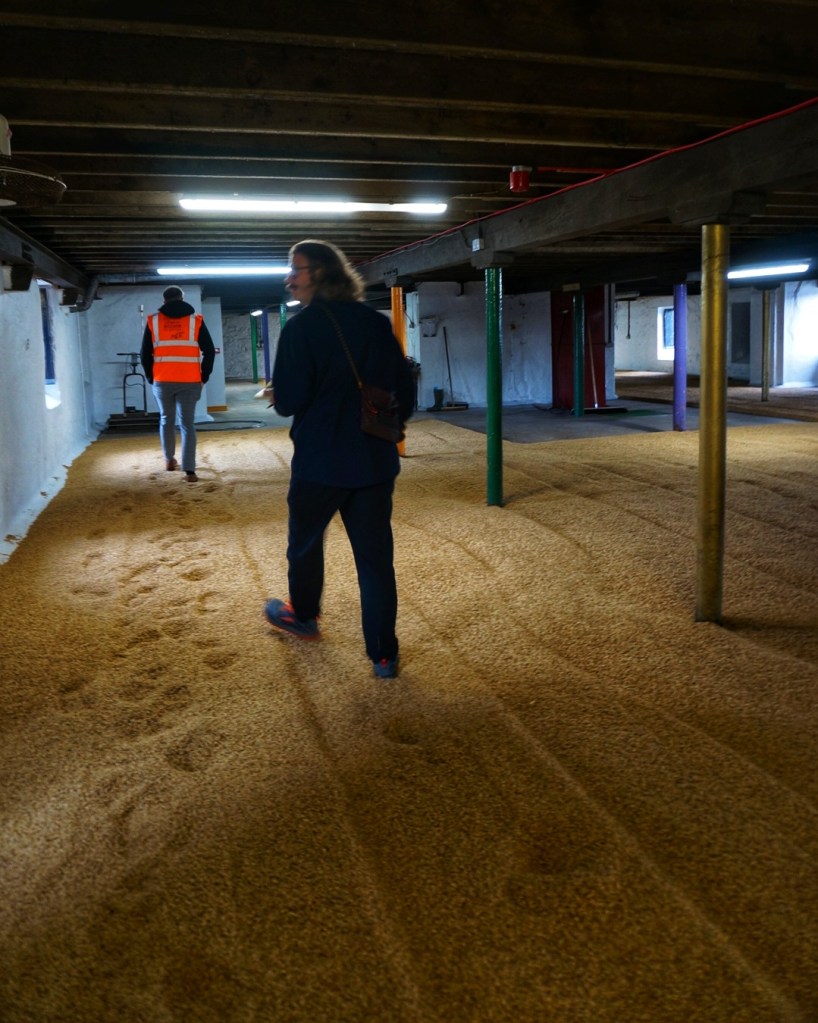
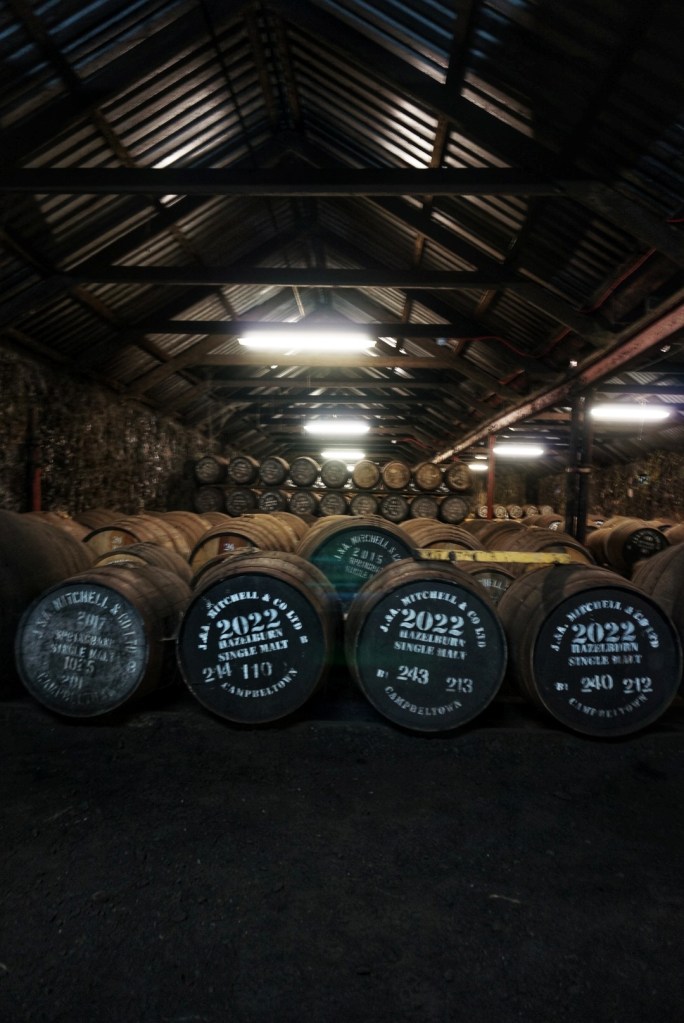
There are distilleries that are polished, modern, theatrical. Springbank is not one of them. It is a place that makes whisky the slow, demanding, inconvenient way because that’s the way the whisky needs to be made. Every stage of production happens on site: malting, mashing, fermentation, distillation, maturation. Nothing is rushed, nothing is outsourced, nothing is designed for efficiency. You feel the philosophy the moment you step onto the malt floors — the weight of the barley underfoot, the heat rising from the kiln, the rhythmic scrape of the shovel.
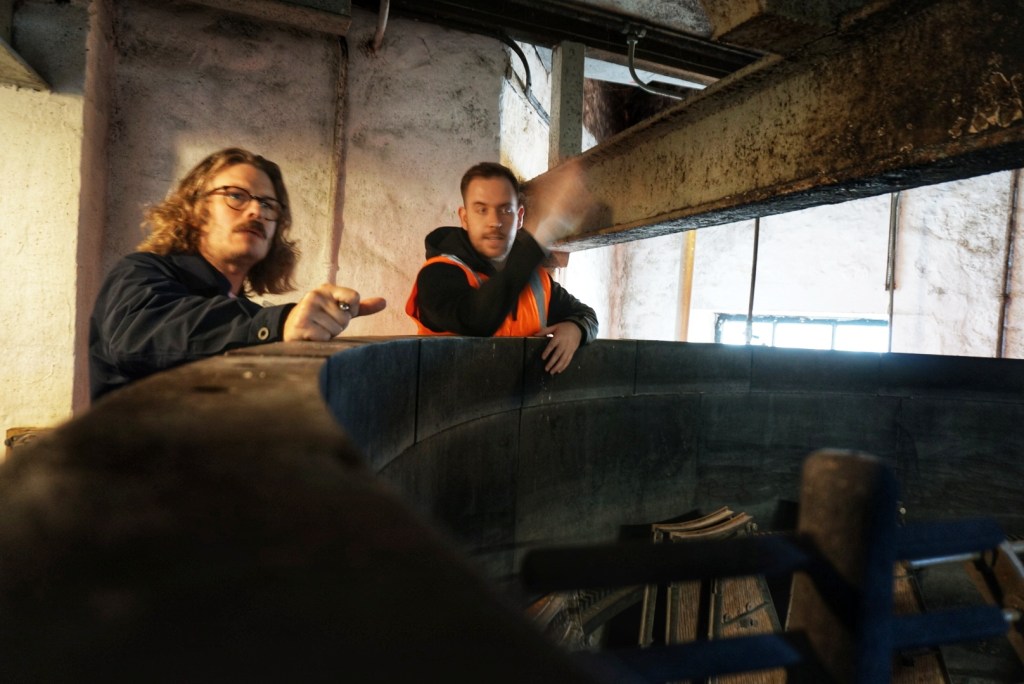
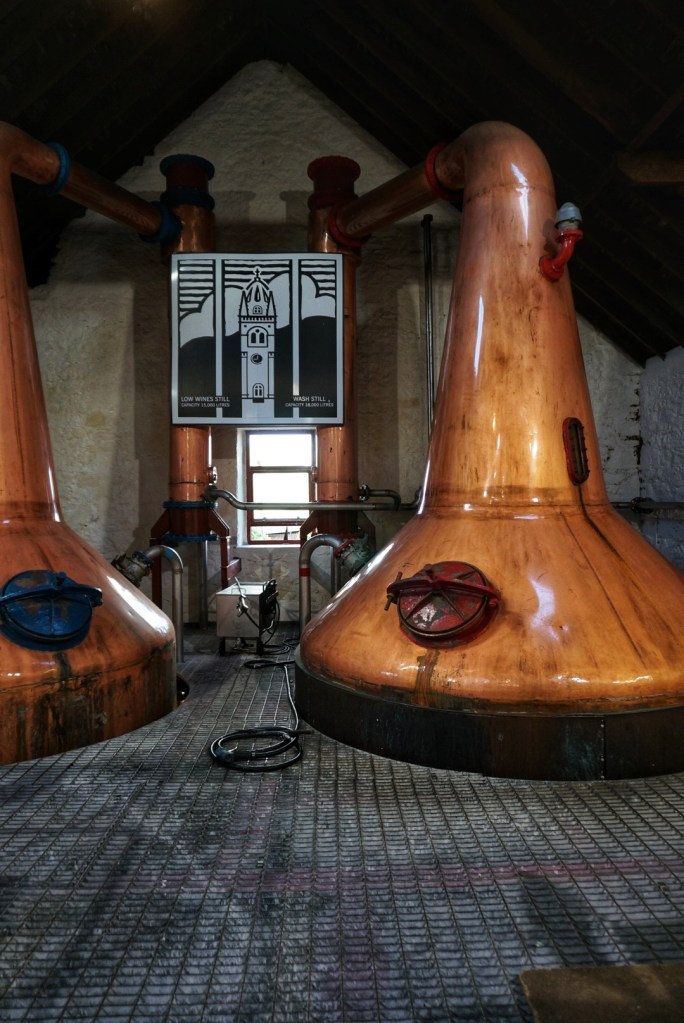
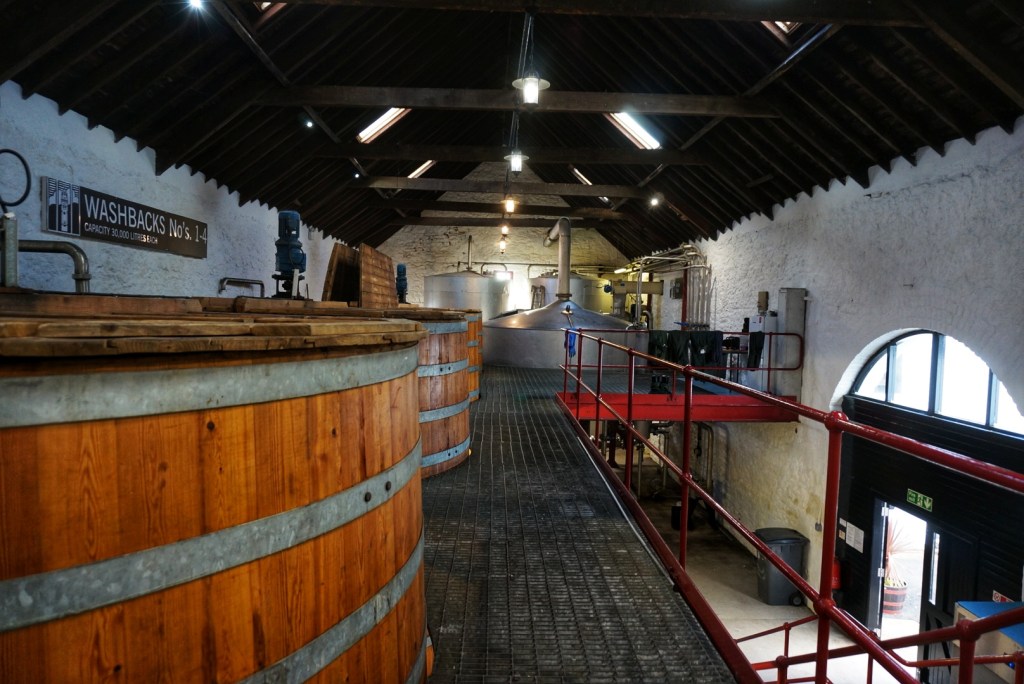
We joined the tour and found ourselves pulled into the heart of the process. Normally in the stillhouse, the copper would have gleamed dully under the work lights; pipes clanked; washbacks frothed with living ferment. But not today. For the first time since 1960 the three mighty stills were out for repair. Still though, in the warehouses, the air was dense with evaporated spirit — dark, humid, ancient-smelling. Time does something different here. It slows, expands, becomes palpable. Springbank is not a performance; it is a working day made visible.
At one point, I was invited to help turn the malt. The grain moved like warm sand under the shovel, heavy and responsive. It is physical work — labour that binds body to place — and in that moment the romance of whisky sharpened into something more honest. Andrea watched from the side, smiling, absorbing the whole scene with that mixture of curiosity and warmth she brings everywhere. It struck me again that for all my years of writing about whisky, she enters these rooms with fresher eyes, asking clearer questions, seeing what I sometimes forget to look for.
If you love whisky — truly love it — visiting Springbank feels like making a pilgrimage not to a shrine but to a workshop. It is the sound of industry, the smell of stubbornness, the presence of a craft that has refused to dilute itself.
After the tour, we walked through town — past the cross, past shuttered shopfronts and new cafés, past that sense of a place both weathered and quietly reviving. People nodded to each other in passing. Campbeltown has a way of holding you at arm’s length while still making room for you.
Dinner was at The Black Sheep, a pub with an honest, lived-in atmosphere and the sort of menu that tells you exactly what to expect. I ordered haggis nachos, the local specialty that looks like nothing but tastes like everything — salty, savoury, comforting, the ideal food after a day spent climbing through distilleries. More drams followed. Conversation loosened. Someone joked with Andrea about being given half-pints all day — a familiar rural habit that both amused and mildly irritated her, given her credentials in the beer world.
Outside, night had settled over the harbour. The wind had picked up, but the town was warm in its own way — stubborn, unpolished, proud of what it is and unimpressed by what it isn’t. Campbeltown doesn’t seduce you; it wins you through persistence, honesty and a kind of maritime grit that most whisky regions lost a century ago.
Arran: Calm Seas, Small Miracles, and an Island Made for Whisky
We left Campbeltown before the sun had fully lifted, the road quiet, the town still half-asleep. The drive east across Kintyre toward Claonaig felt different from the day before — less cinematic and more purposeful. This was the moment in any whisky road trip where ambition can unravel. Ferries in Scotland have minds of their own: they cancel, they drift off-schedule, they disappear into mist. And the 10:05 sailing from Claonaig to Lochranza was the only one that fit our entire plan. Miss it and the rhythm of the journey collapsed.
The road narrowed as we approached the coast, hedges rising high on both sides. We joined a small line of cars and work vans — the unmistakable mix of locals, contractors, early-shift labourers and the odd day-tripper. A few modern hippies in battered vans. A sheepdog in the front seat of a truck. Scotland in microcosm. We edged slowly forward. The air smelled of salt and diesel. The ferry nosed into view.
A calm sea. A rare late-October gift.
We boarded with the quiet relief of people who had expected drama and been granted mercy instead. The boat was small, built more for utility than romance, but as soon as we pulled away from the shore the whole world fell still. The crossing is short, barely half an hour, but it felt suspended outside of time — hills rising on either side, the water flat and grey-blue like brushed metal, gulls drifting lazily in the updrafts. Andrea squeezed my hand once, and that was enough. The storm everyone had warned us about never appeared. A silent prayer, answered.
By 10:35, we slipped onto Arran, an island often described as “Scotland in miniature.” Highlands in the north, Lowlands in the south, jagged ridges, soft glens, rocky coastline, sheltered bays — all the geographies of the mainland compressed into a single shape. And whisky, too: two distilleries, each embodying different sides of the island’s personality.
We made a brief stop at Lochranza Distillery, Arran’s first distillery, built in 1995 and tucked into a valley at the foot of steep, dramatic hills. Mist still clung to the tops; stags sometimes graze here, though not that morning. We didn’t have time for a tour — only a wander through the shop, the smell of warm mash drifting faintly from the production rooms, the sense of a place that helped revive Arran’s old whisky reputation after more than a century without distillation. It was a gentle beginning.
Then came the push south.
The road down the coast twists, turns, tightens, widens around bays and farmhouses, past standing stones, over narrow bridges and under lines of trees. It is impossibly beautiful in that unapologetic Scottish way: no theatrics, just a straightforward display of ridges and water and light. We needed to reach Lagg Distillery for the tour, and we made good time, helped by the island drivers’ near-telepathic courtesy.
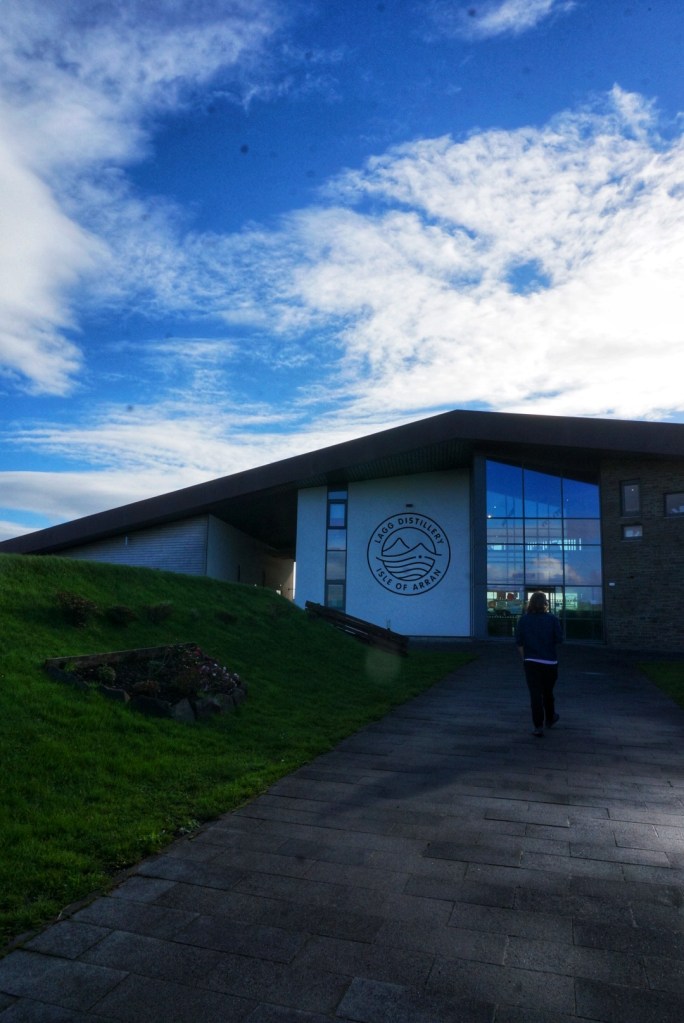
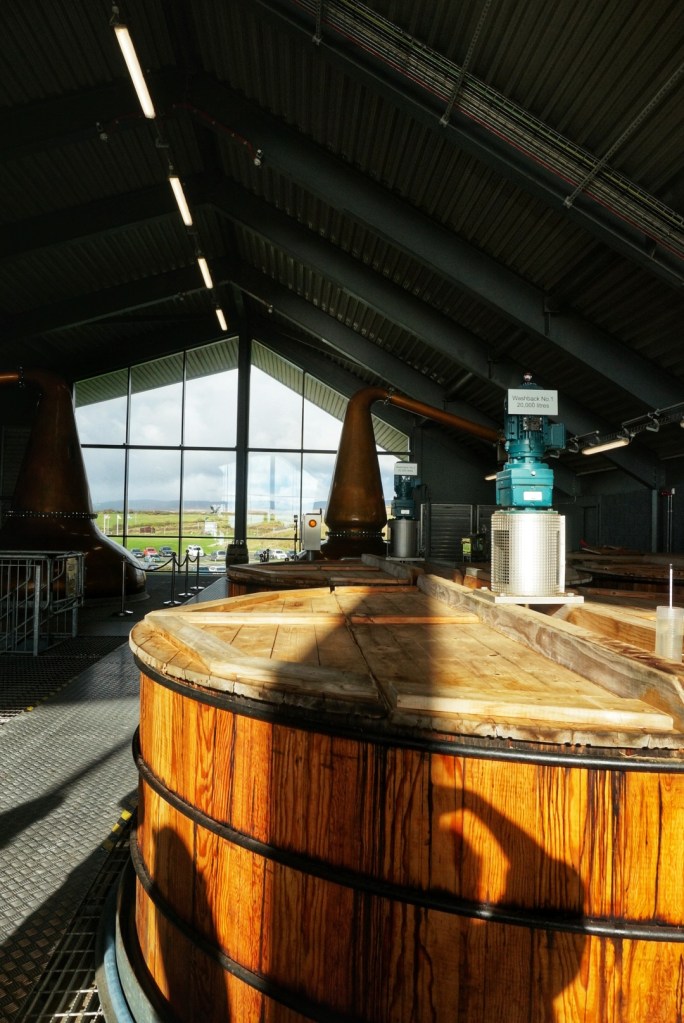
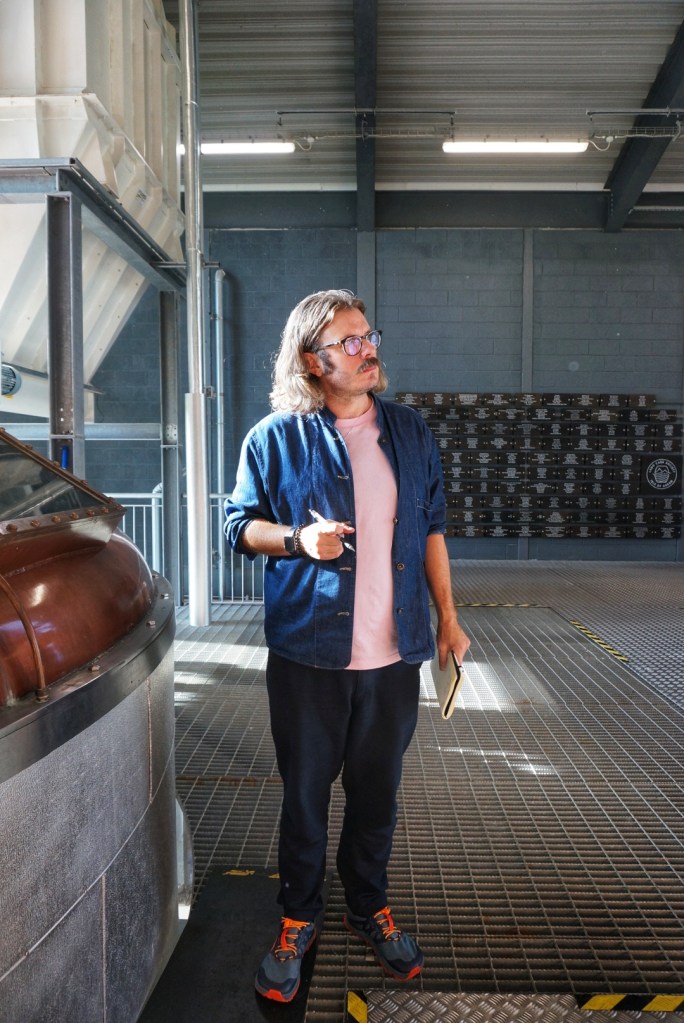
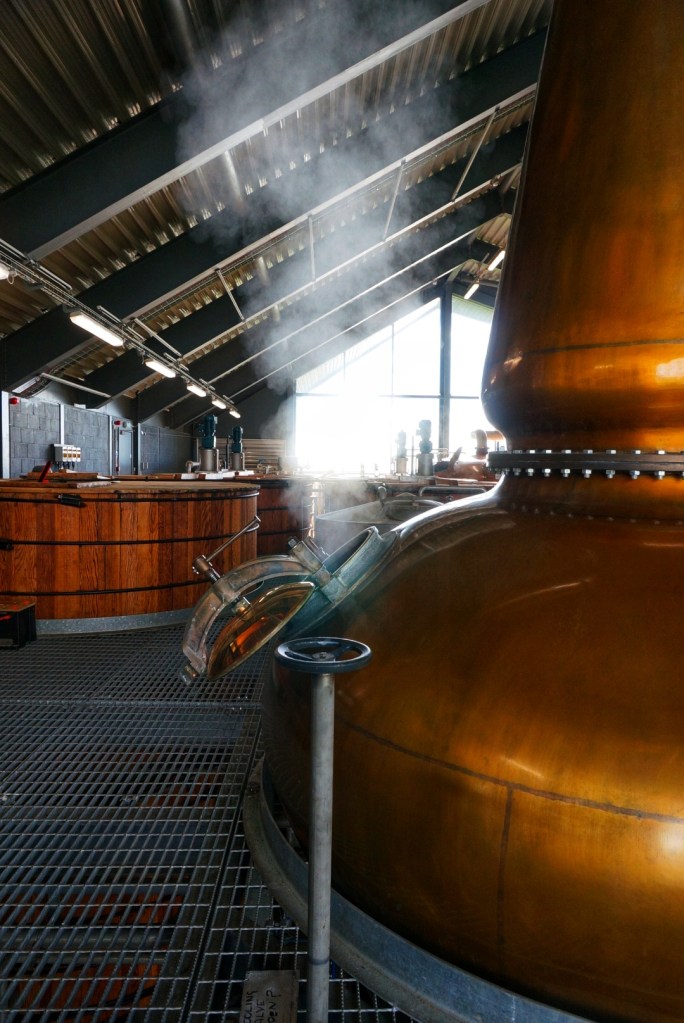
Lagg is Arran’s second distillery, opened in 2019 at the opposite end of the island — a modern, sharp-edged, architectural presence built to embrace peat and the heavier, smokier styles the island once produced. Inside, though, there was nothing clinical or pretentious. Our guide, Chris, was one of the kindest and most natural storytellers we encountered on the whole trip — curious, generous, genuinely interested in where people had come from and what they hoped to learn. The tour swept us through barley, malting philosophy, fermentation choices, and the bright copper stills rising like sculptures. It was grounded, human, unhurried.
The drams were excellent — layered, smoky, surprisingly delicate at times — and the setting made them sing. Huge windows opened onto the Firth of Clyde, light spilling across tables as if the island wanted to pour itself into every glass.
The drive up the east coast to the main town Brodick was warm with that post-whisky looseness — not intoxication, but a slight recalibration of the senses. Places seemed sharper. Colours richer. Even the rain that began to spit against the windscreen felt like part of the island’s welcome rather than a hindrance.
We checked into The Douglas Hotel, Arran’s great harbour-side landmark, and were met by Holly Beedie, whose welcome carried the perfect balance of Scottish directness and genuine care. This is a hotel that understands both luxury and locality — crisp rooms, soft beds, big windows with views across to the mainland, but a staff who treat you not like guests to be managed but like people they’re genuinely pleased to see.
Dinner was exceptional.The dining room buzzed with that unmistakable island blend of visiting walkers, romantic couples, business travellers and locals who treat the Douglas as their second living room.
Afterwards, we wandered out into the rain to The Fallen Goat, one of the most characterful pubs on the island — brightly lit, deep laughter, a mix of regulars clustered at the bar. At one point a Scottish man turned to Andrea and, without hesitation, launched into Swedish. It wasn’t perfect, but it was perfectly charming. A tiny, funny moment that said everything about Arran’s personality: worldly, curious, unpretentious.
Later, we made our way to the nearby Ormidale Hotel. Cask ale, an appropriate whisky selection, two older ladies working the bar with an ease that made everyone feel looked after. We found a table, ordered drams and opened yet another game of Uno — our running ritual of the trip.
It was our last full night in Scotland, and the island held us gently. The rain eased.
Tomorrow would bring the final ferry, the final drive, the repacking of a suitcase dangerously full of whisky. But that night on Arran — warm, rain-soaked, whisky-softened, and threaded through with small, human moments — felt like the completion of something much larger.
The journey had started with Speyside’s marathon paths and ended with island roads. A loop not just across Scotland, but across time, memory, and something like return.
The Return: One Last Crossing, One Last Prayer, and a Suitcase Full of Whisky
Morning over Brodick Bay was soft and silver. The final ferry approached like a test. We had collected whisky the way others collect postcards — a bottle here, a bottle there, until the suitcase became a dense, sloshing question mark.
Would it be too heavy? Would anything crack? Would customs decide today was the day?
Thankful for another calm crossing and no traffic jams. We rolled into Edinburgh, checked the whisky-laden case with the reverence of offering a sacrifice, and waited for a raised eyebrow or a hand-wave.
None came.
Hours later in Sweden, we opened the case.
Not a leak. Not a crack. Every bottle intact. Every memory inside.
The journey had held together — against weather, ferries, miles, and the unpredictable alchemy of travel.
So, I venture, perhaps the perfect whisky journey isn’t in Speyside after all. Perhaps it begins there — and then follows the roads most people never think to take. A whisky road less travelled.
Photos by Andrea Sohlström.
 Drinks Galore
Leave a comment