
Danish whisky finally defines itself – and not a moment too soon.
I’ve been following the rise of Danish whisky for years now — a scene bubbling away quietly, far from the whisky heartlands of Scotland or Ireland, but full of creativity, guts, and more than a little Nordic stubbornness.
But something has always niggled at me. What is Danish whisky, really? Ask a handful of Danish distillers and you might get a handful of different answers. And more worryingly — ask a supermarket buyer or a casual whisky fan, and the answer might be: I didn’t even know Denmark made whisky.
That might be about to change.
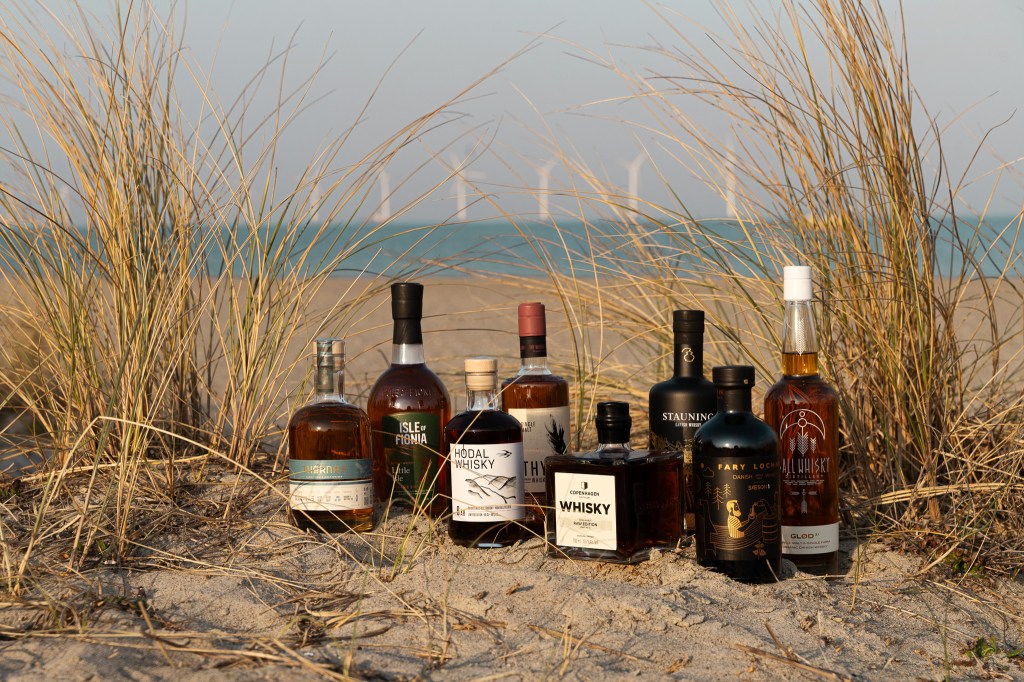
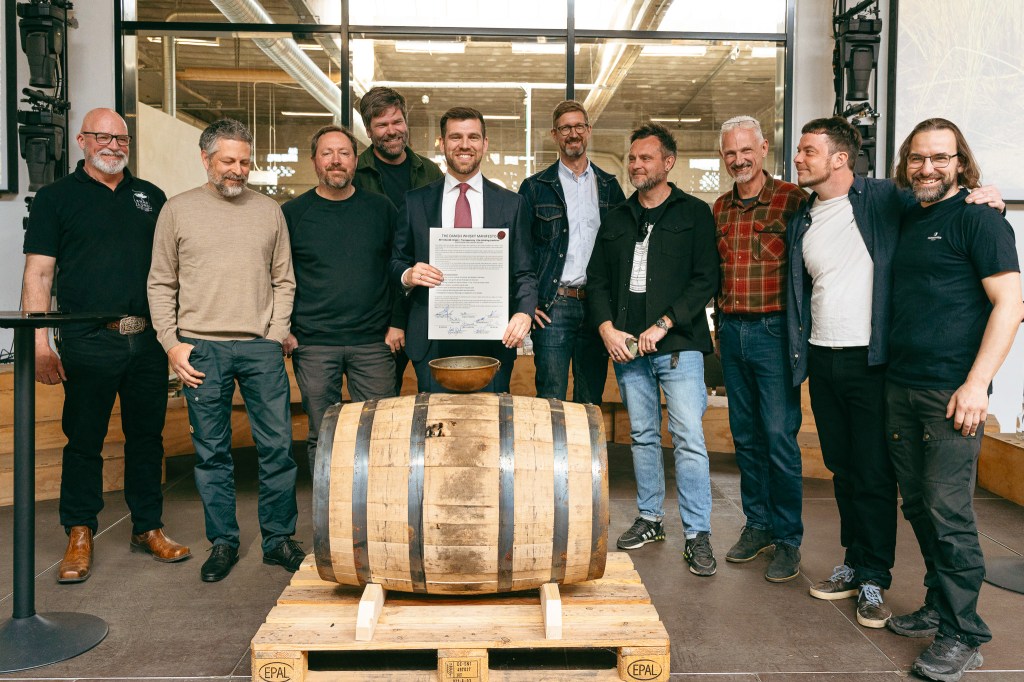

A manifesto with meaning
On April 10th in Copenhagen, I was lucky enough to be one of the only international writers at the launch of The Danish Whisky Manifesto — a set of rules and values agreed by ten of Denmark’s leading distilleries, designed to answer that very question.
It is, in the words of Hans Martin Hansgaard — co-founder of Stauning Whisky and one of the driving forces behind the manifesto — a line in the sand.
“We know what Scotch whisky is. We know what American bourbon is. But Danish whisky? Until now, we didn’t know. And worse — some of what was being sold as Danish whisky wasn’t even made here.”
Imagine that happening in Scotland. A whisky proudly labelled Scottish but distilled and aged in Poland or Germany? The SWA’s lawyers wouldn’t know which cease-and-desist to send first.
And yet that was the reality facing Danish producers — pioneers like Stauning, Thy, and Nyborg — who have spent decades growing grain, building distilleries from scratch, and carving out a fledgling industry… only to see the term “Danish whisky” risk being diluted before it had even found its audience.
Rules for the future — not the past
So what is the manifesto? It’s not a copy of the Scotch Whisky Regulations — and crucially, it doesn’t want to be.
Instead, it draws inspiration from an unlikely source: the Nordic Kitchen Manifesto, that early-2000s rallying cry that turned New Nordic Cuisine into a global movement. Local ingredients. Seasonal produce. Absolute transparency. Values over dogma.
“We literally took each line of the Nordic Kitchen Manifesto and translated it into whisky terms,” Hans told me over a whisky at the launch. “And then adapted it from there.”
The result is a framework that demands whisky labelled as Danish must be mashed, fermented, distilled, and aged in Denmark. And by 2030, it must be made entirely from Danish-grown grain — unless stated otherwise on the label.
And yet elsewhere, the rules are refreshingly open: any still type, any maturation wood, and a clear encouragement for innovation — as long as you’re honest about it.
This is not about replicating Scotch; it’s about protecting Denmark’s right to be different.
Why it matters
To an outsider, this might seem like inside baseball — a dry trade agreement between a handful of Nordic distilleries.
But to me, it feels like something bigger.
I’ve seen first-hand how messy things can get without clarity. Just look at the Irish GI, which I’ve covered extensively. Its implementation was vital — but it was also divisive, with concerns about how flexible or rigid it should be, who it benefited, and who it excluded.
The Danish Whisky Manifesto feels like a more optimistic origin story. A scene still young enough, still small enough, to come together around common values before commercial pressures tear it apart.
And those values — transparency, honesty, locality — feel bang on for today’s drinkers.
As Jakob Stjernholm of Thy Whisky put it during the launch:
“Denmark is a grain country. Strong agricultural roots. If we can’t use that in our whisky, what are we even doing?”
Whisky with a Danish accent
And yet — let’s be clear — there is no singular flavour of Danish whisky. No peat line drawn through its heart like Islay. No bourbon uniformity like Kentucky.
Instead, as Hans told me, the Danish character lies elsewhere:
“It’s like Danish furniture. It’s not about a single style. It’s about craftsmanship, quality, effort.”
And maybe that’s exactly what makes this moment so exciting.
This is a manifesto about how whisky is made, not just how it tastes. It’s about building something with roots, not chasing trends with finishes.
A marriage in a glass
One of the most memorable moments of the launch came when whiskies from all ten founding distilleries were vatted together — deliberately, symbolically — into a single blend.
Nobody quite knew how it would taste. That wasn’t really the point.
But when the glasses were poured, the result was something rather wonderful: a living, breathing snapshot of Danish whisky today — its differences in style and approach not fighting, but somehow fitting.
“We didn’t know exactly how it would come together,” Hans admitted. “But you could taste little signatures from each producer — smoky notes from one, grassy brightness from another. And yet… it worked.”
That’s the real spirit of this manifesto. Not conformity. Not restriction. But unity with character.
The next chapter starts now
Where this goes next is anyone’s guess. There’s talk of applying for GI status down the line. Of building rural whisky trails to rival Ireland’s or Scotland’s. Of distillers pushing further into 100% Danish supply chains — maybe even reviving lost Danish cooperage skills.
But most importantly, this manifesto gives Danish whisky something it’s never had before: a clear story to tell.
And stories, as every whisky lover knows, are half the magic.
The Core Principles of the Manifesto:
- Must be mashed, fermented, and distilled in Denmark
- Must age for at least three years in Denmark
- Made from Danish cereals – if not, it must be clearly stated
- All cereals, malted or unmalted, may be used
- Different types of distillation equipment may be used
- Various types of wood may be used in cask maturation
- The addition of colorants, flavorings, or sweeteners is not allowed
The Ten Founding Distilleries:
- Stauning Whisky
- Thy Whisky
- Nyborg Distillery
- Copenhagen Distillery
- Fary Lochan
- Nordisk Brænderi
- Ærø Distillery
- Knaplund Distillery
- Thornæs Distillery
- Sall Whisky
 Drinks Galore
Leave a comment